How NOMICS supports Paediatricians
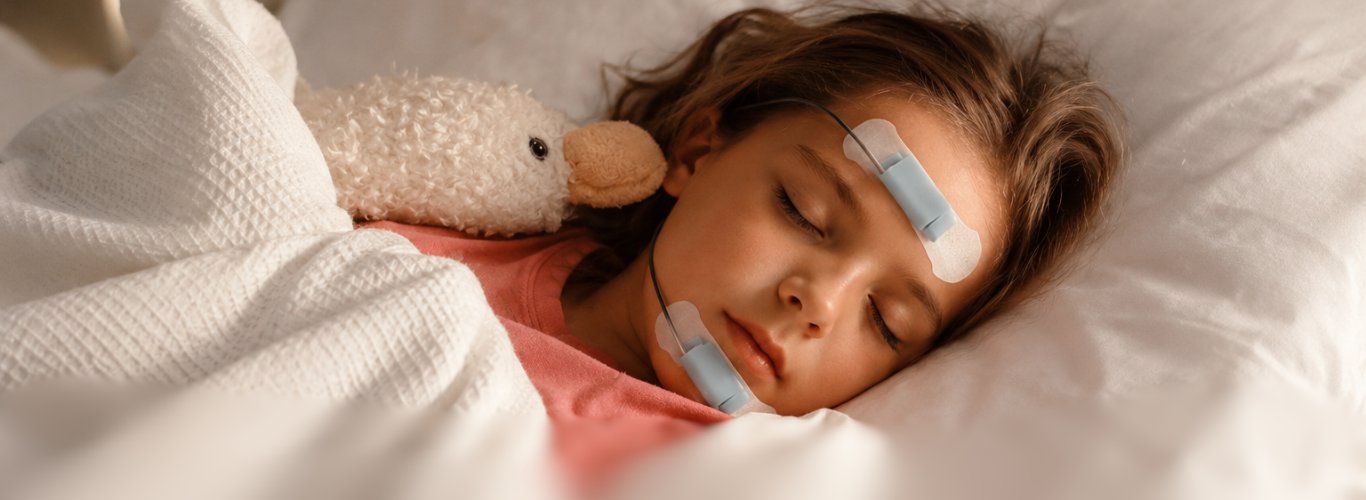
When signal quality matters, diagnostic insight matters too.
Sleep-disordered breathing in children can be challenging to assess. Movements during sleep may compromise signal quality, while the AHI alone may not capture the full picture.
NOMICS combines JAWAC® technology and APIOS to provide robust physiological signals and additional insights to support paediatric sleep diagnostics.
The challenge of paediatric sleep diagnostics
Sleep-disordered breathing can affect children's growth, cognitive development, learning, behaviour and overall health. Yet, diagnosis presents specific challenges:
Movement during sleep: Sensor displacement can cause signal loss or artefacts.
Limits of the AHI: This key parameter does not capture every mechanism affecting sleep quality.
Additional insights: Respiratory effort, micro-arousals and RERAs can provide complementary clinical information.
Reliable recordings and relevant physiological data are essential for clinical assessment.
A robust signal, even when children move
Designed for the realities of paediatric sleep recording.
Brizzy+ and Somnolter incorporate JAWAC® technology, which measures jaw activity throughout the night. Positioned directly on the head, the sensor is less affected by body movements, helping preserve signal quality.
Beyond AHI: additional physiological insights
A normal AHI does not necessarily exclude other clinically relevant sleep-related breathing abnormalities. APIOS analyses the JAWAC® signal to provide additional physiological information, including:
Respiratory effort
Micro-arousals
RERAs (Respiratory Effort-Related Arousals)
Mouth opening and mouth breathing
Estimated sleep time
These parameters complement the AHI and support clinical interpretation in the context of each child's symptoms and clinical presentation.
Paediatric diagnostics adapted to the child
A challenging examination should not mean compromising on signal quality or limiting the information available to clinicians. By combining JAWAC® technology with APIOS, NOMICS supports a more comprehensive assessment of sleep-disordered breathing in children.
Because a normal AHI does not always tell the whole story.